
IslamiCity
Listen PodCasts, Live Quran, Watch Videos @VideoHub

In recent years, geopolitical discussions online have increasingly blended real military analysis with speculation, ideology, and hypothetical scenarios. A striking example is a long-form discussion circulating online in which commentators describe an alleged large-scale war between Iran, Israel, and the United States.
The conversation includes claims of destroyed U.S. military bases, Iranian missile superiority, the closure of the Strait of Hormuz, and even the possibility of nuclear escalation.
While such narratives can sound persuasive-especially when delivered in technical language-they highlight an important modern challenge: distinguishing between verified geopolitical developments, plausible military analysis, and speculative or misleading information.
The discussion portrays a dramatic conflict in which Iran responds to attacks from the United States and Israel by striking American bases across the Persian Gulf and destroying key radar systems. According to the speakers, Iranian missiles and drones allegedly disable air-defense networks, damage oil infrastructure, and close the strategic shipping route of the Strait of Hormuz.
The narrative further claims that several major military installations-such as Al Udeid Air Base-have been destroyed and that the headquarters of the United States Fifth Fleet has been severely damaged.
If events of this magnitude had actually occurred, they would represent one of the most consequential wars in modern history. Global oil markets would collapse overnight, international alliances would mobilize, and world leaders would be responding in emergency summits.
Yet none of these events have been confirmed by credible international reporting or official sources. This suggests the scenario being discussed is either speculative analysis, a hypothetical war simulation, or a narrative constructed for commentary rather than reporting current events.
The conversation also includes a number of technical claims about missile technology and air defense systems. Some of these statements contain elements of truth but are presented in ways that oversimplify complex military realities.
For example, the speakers argue that Iranian hypersonic missiles can easily defeat U.S. and Israeli missile defenses. Hypersonic weapons-missiles capable of traveling faster than Mach 5 and maneuvering during flight-do pose serious challenges for defensive systems. Countries such as Russia and China have already deployed such weapons, while the United States continues to develop and test its own.
However, the broader assertion that Western missile defenses are essentially useless is exaggerated. Modern systems integrate multiple layers of sensors, radar networks, and interceptors designed to respond to different types of threats.
Military analysts generally agree that no air-defense system is perfect, especially against large-scale missile salvos. Nevertheless, portraying defense systems as entirely ineffective misrepresents their role: they are designed to reduce damage and intercept a portion of incoming threats rather than guarantee total protection.
Another major claim involves the strategic impact of closing the Strait of Hormuz. This narrow waterway is one of the world's most critical energy chokepoints. Roughly a fifth of global oil shipments pass through it each day.
In theory, Iran has the capability to disrupt traffic there through naval mines, missiles, drones, and small fast-attack boats. Military planners have long considered this possibility. However, completely closing the strait for an extended period would likely trigger a massive international military response aimed at reopening it.
Therefore, while the strategic importance of the strait is real, the idea of a prolonged closure without a major global military escalation is unlikely.
One section of the discussion shifts to the consequences of nuclear warfare. Here the conversation becomes more grounded in established scientific research. Scholars have long warned about the environmental effects of nuclear conflict, including the possibility of "nuclear winter," in which massive firestorms inject soot into the upper atmosphere and block sunlight.
Studies by atmospheric scientists have suggested that a large-scale nuclear exchange could drastically reduce global temperatures and disrupt agriculture worldwide. Even a limited regional nuclear war could potentially produce severe climatic effects.
These concerns are reflected in numerous international initiatives aimed at reducing nuclear arsenals and preventing their use. Books such as Nuclear War: A Scenario attempt to illustrate how quickly nuclear escalation could unfold once the first weapon is launched.
Despite these risks, nuclear weapons remain central to the deterrence strategies of major powers, meaning that a small number of political leaders ultimately control weapons capable of devastating the planet.
Perhaps the most revealing aspect of discussions like this is how easily they blur the line between analysis and assertion. The speakers repeatedly suggest that mainstream media suppresses the "real story," implying that alternative channels reveal hidden truths.
In reality, major geopolitical developments-especially wars involving multiple states and global energy infrastructure-are extraordinarily difficult to conceal. Modern satellite monitoring, financial markets, intelligence agencies, and international media networks make it nearly impossible to hide large-scale military events.
What often occurs instead is the rapid spread of speculative narratives, particularly online, where dramatic claims can circulate faster than fact-checking or verification.
The discussion of a massive U.S.-Israel-Iran war illustrates how modern geopolitical commentary can mix legitimate strategic concerns with speculative or unsupported claims. Some elements-such as the vulnerability of infrastructure, the importance of the Strait of Hormuz, and the catastrophic potential of nuclear conflict-are grounded in reality. Others, however, rely on scenarios that have not occurred or present complex military issues in misleading ways.
In an era of constant digital information, understanding global security requires careful evaluation of sources, evidence, and context. Dramatic narratives may capture attention, but responsible analysis demands separating what is possible, what is plausible, and what is actually happening.


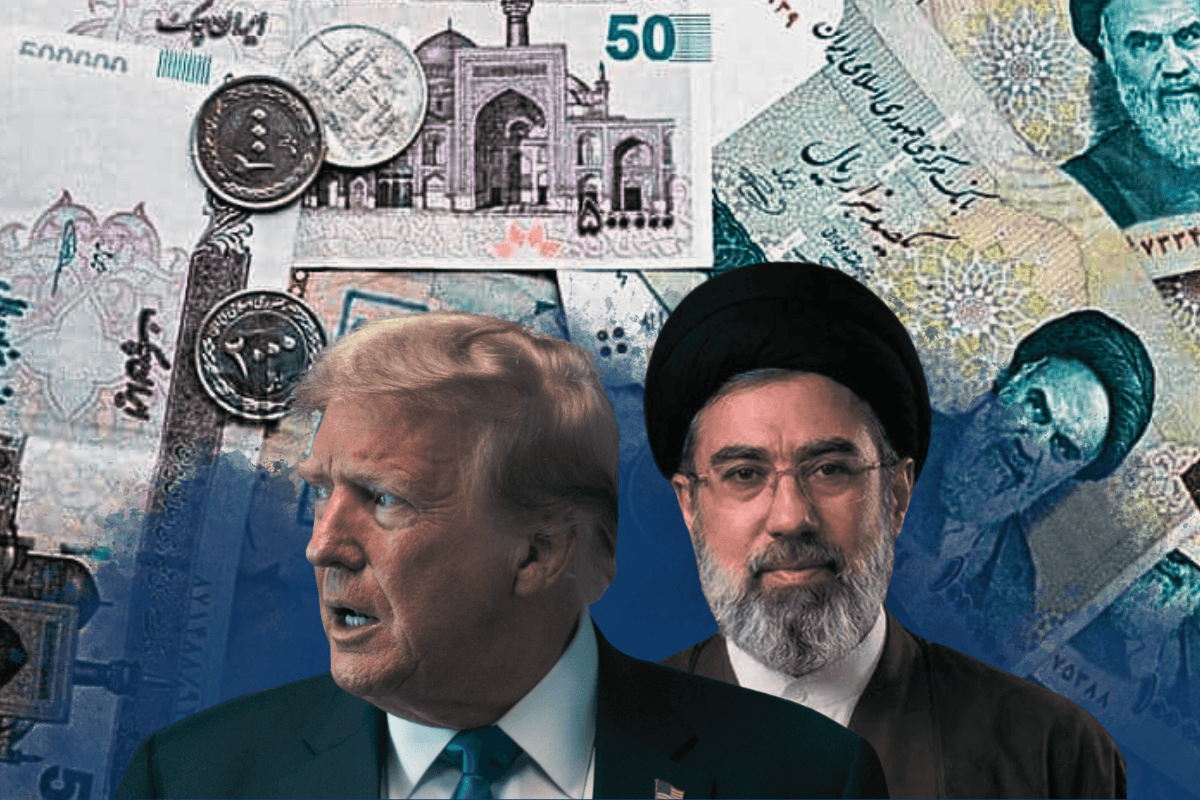 Iran currency collapses as US sanctions and blockade deepen economic crisis